
Top 5 Packaging Trends: How Companies Are Rethinking Sustainability, Efficiency, and Design? | Innovative Heat Shrink Machines and Sustainable Packaging Films
Benison is a high-quality Shrink Packaging, Shrink Tamper Band, Packaging Lines, Packaging Machines, Packaging Material, Automatic Packaging Machines, Packaging Film, Laminated Materials, Automatic Production Line supplier from Taiwan since 1962. 60 years professional experience in packaging industry and total 400 workers locating in Taiwan's headquarters and three overseas branches of China, Philippines and Thailand. Also Benison has distributors around the world more than 50 countries to provide 24 hours service every day.
Top 5 Packaging Trends: How Companies Are Rethinking Sustainability, Efficiency, and Design?
For a lot of manufacturers, packaging doesn' t get much attention until something goes wrong. It used to be the last step before shipping, and that was about it.
That' s changed.
With costs going up and more pressure around sustainability and performance, packaging has become one of the first areas people start questioning and adjusting.
When we talk with customers, the questions tend to sound very similar.
“Is this packaging really the better option?”
“Does it still make sense to do this part by hand?”
“Is packaging only protecting the product, or should it be doing more than that?”
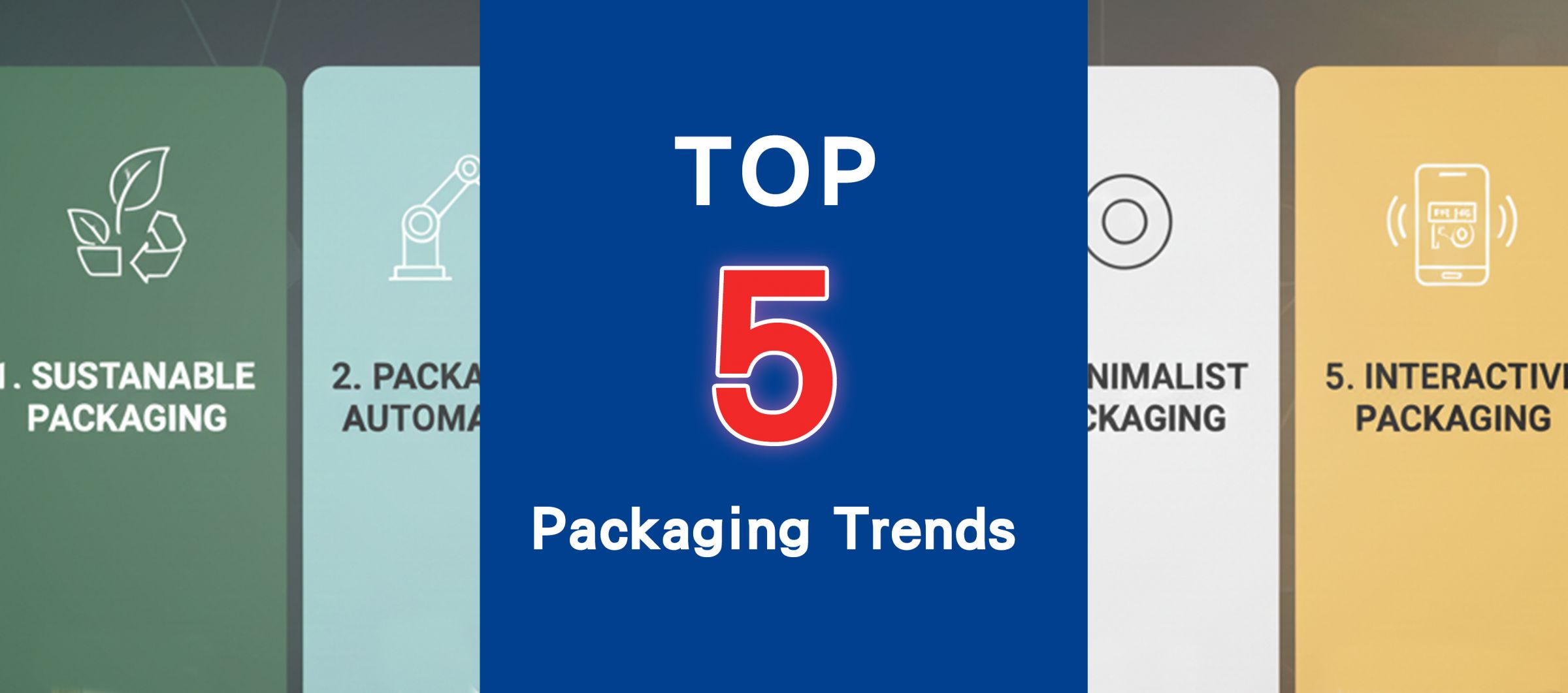
Below are five packaging trends we see most often in real projects, and how they are influencing decision-making across the industry.
1. Sustainable Packaging: Good Intentions Need Practical Thinking
Most companies don' t move toward sustainable packaging without a reason. Consumer expectations, regulations, and internal sustainability goals all play a role.
A common first step is switching away from plastic. Paper, metal, or glass often feel like safer choices because they' re recyclable and easier to explain.
In practice, it ' s rarely that simple.
Recyclability alone doesn' t tell the whole story. Weight, transport distance, and energy use during production all add up. Some materials look good on paper but create higher emissions before they even reach the shelf. Without looking at the full life cycle, the impact isn' t always reduced—it' s just moved to a different stage.
From what we see long term, packaging solutions with real sustainability potential usually focus on:
1. Biodegradable or compostable materials where infrastructure allows
2. Greater use of PCR (post-consumer recycled) and PIR (post-industrial recycled) content
3. Reducing material usage while maintaining required protection and performance
Sustainable packaging is less about swapping materials and more about rethinking the system as a whole.
2. Packaging Automation: No Longer Just for Large Corporations
Automation used to be seen as something only large-scale manufacturers could justify. That perception is changing quickly.
With ongoing labor shortages, rising labor costs, and tighter quality requirements, more companies are asking practical questions:
1. Which packaging steps rely too heavily on manual work?
2. Where do errors occur most often?
3. Does partial automation make more sense than a full-line upgrade?
The real value of automation isn' t speed alone. It' s consistency, predictability, and better control over long-term operating costs.
For many businesses, automation is less about aggressive expansion and more about reducing risk.
3. Creative and Customized Packaging: When Packaging Carries the Message
Packaging design is no longer just decoration. In many cases, it' s the first interaction a consumer has with a product.
Layout, typography, and visual tone often determine whether someone pauses—or simply moves on.
In crowded markets, packaging that works well is rarely the most complex. It' s the one that feels right for the product and the audience.
Effective packaging design usually does three things:
1.It clearly communicates quality and function
2.It matches the brand' s positioning
3.It makes the consumer feel considered, not sold to
When those elements come together, packaging helps turn one-time purchases into repeat choices.
4. Minimalist Packaging: When Doing Less Actually Gets Noticed
Walk through any supermarket aisle and you'll see the same thing everywhere—bright colours, big claims, crowded graphics all fighting for attention. That' s exactly why minimalist packaging has started to work again.
Using fewer colors, simpler type, and less text makes a product easier to spot, not harder. Your eye knows where to land. In many cases, these designs also rely on a single material or a simpler structure, which quietly makes production easier and recycling more straightforward.
What began as a design preference has turned into something more practical. Less complexity often means fewer steps, fewer materials, and fewer problems down the line.
5. Interactive Packaging: Giving People a Reason to Stop
Interactive packaging doesn' t have to be high-tech or complicated. Sometimes it' s just a QR code. Sometimes it' s a small design detail that makes someone curious enough to pause.
The goal isn' t to impress. It' s to slow people down for a second.
When packaging gives access to extra information, a short story, or even a small interaction, it stops being just something that gets thrown away. It becomes part of how the brand is remembered.
What These Trends Have in Common
At first glance, these trends seem unrelated. In reality, they all point to the same shift.
Packaging is no longer treated as a fixed cost that gets decided at the end. It' s becoming part of how companies manage risk, efficiency, and long-term positioning.
The strongest packaging decisions don' t come from chasing trends. They come from understanding what actually works on the production floor, in logistics, and at the point of sale.
Commonly Asked Questions
Q1: Does sustainable packaging simply mean switching to recyclable materials?
Not necessarily. True sustainability requires evaluating the full life cycle (LCA), including weight, transportation energy use, and carbon emissions—not just whether a material is recyclable.
Q2: Does packaging automation always require a high upfront investment?
Not necessarily. Many companies start with partial or critical process automation, focusing on improving stability and reducing long-term labor and error costs rather than just increasing speed.
Q3: Does packaging design really influence consumer decisions?
Yes. Packaging is often the first point of contact between a consumer and a brand. Designs that clearly align with brand positioning are more likely to attract attention and be remembered.
Q4: Is minimalist packaging just a design preference?
Not at all. Minimalist packaging usually involves simpler structures and fewer materials, which can improve production efficiency and recyclability while also making products easier to recognize visually.
So What Makes Sense for Your Packaging?
Packaging trends are useful references, but they shouldn' t be applied blindly.
Material choices, design approaches, and automation levels affect cost, efficiency, and sustainability in very different ways depending on the product and production environment.
If you' re currently reviewing packaging materials, considering automation, or trying to understand which options make sense for long-term development, feel free to fill out the form below to get in touch with Benison.
Recommendation of popular products, please see the product introducing pages for more details.
Top 5 Packaging Trends: How Companies Are Rethinking Sustainability, Efficiency, and Design? | Innovative Heat Shrink Machines and Sustainable Packaging Films
Based in Taiwan since 1962, Benison & Co., Ltd. has been a shrink packaging machines and plastic films manufacturer. Our main product packaging machines include, heat shrink packaging machines, automatic shrink wrap machines, heat tunnel machines, as well as plastic films and label printing services, which are CE certified and sold to over 50 countries.
60 years professional experience in packaging industry and total 400 workers locating in Taiwan's headquarters and three overseas branches of China, Philippines and Thailand. Also Benison has distributors around the world more than 50 countries to provide 24 hours service every day. As a company that manufactures the shrink wrapping machines as well as the shrink packaging materials, we can see to your total needs. Since 1962, We have developed both expertise and technology in our 60 years of experience, becoming a leader in the shrink packaging industry.
Benison has been offering customers high-quality heat shrink packaging and shrink wrap machines, both with advanced technology and 60 years of experience, Benison ensures each customer's demands are met.